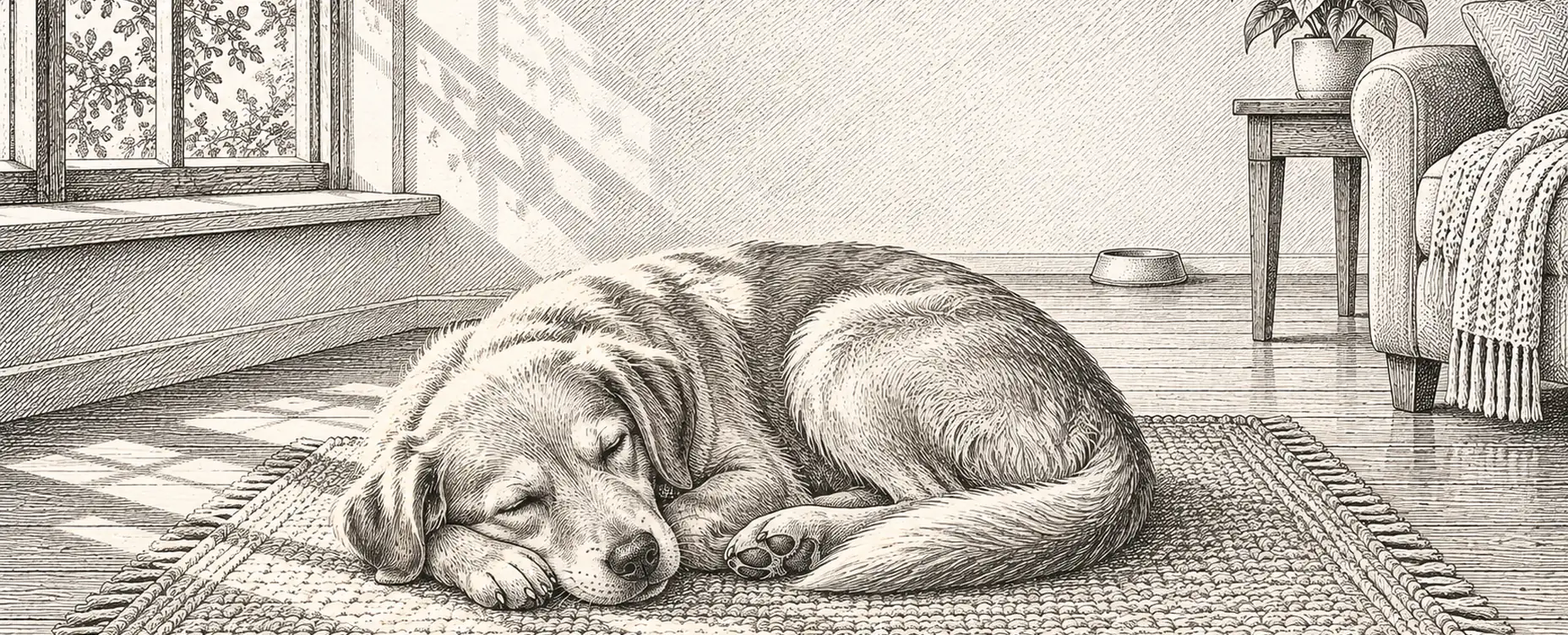
Pets share the environment you build for yourself, and they experience it differently — they cannot open a window, adjust a thermostat, explain that they are too hot, or tell you that the alarm siren terrifies them.
A connected home can genuinely improve their lot, and it can also make life worse in ways that are easy to miss. Here is what we would and would not do.
Temperature is the serious one
Animals left alone in a house are entirely dependent on the environment you left them in, and heat is dangerous in a way cold usually is not.
Dogs and cats cool inefficiently. Dogs rely mainly on panting, and flat-faced breeds, older animals, overweight animals and thick-coated breeds are considerably worse at it. Heatstroke in dogs can be fatal and can develop quickly.
A closed house heats up faster than people expect, particularly a room with afternoon sun, and a conservatory or a glazed extension can become lethal within a couple of hours. If you have such a room, make sure a pet cannot be shut in it.
Small animals are more vulnerable. Rabbits, guinea pigs, birds and reptiles have narrower tolerances than dogs and cats, and a hutch or a cage in a sunny spot is a genuine risk.
What we would do: a temperature sensor in every room a pet can access, with alerting at a threshold appropriate for your animal, and automated shading and ventilation on hot days. If you use cooling, run it while you are out rather than only when you are home.
Cold matters too for small animals, thin-coated dogs, older animals and anything housed in an outbuilding. A low-temperature alert on a garage, utility room or outdoor hutch is cheap and sensible.
Water, food and the limits of automation
Automatic feeders work well for cats and for dogs on measured portions, and they help enormously with weight management and with animals needing timed meals. Two cautions: a jam or a power failure means a missed meal, so a camera or a weight sensor confirming the food actually dispensed is worth having, and multi-pet households need feeders that identify the animal or the fastest eater takes everything.
Water fountains encourage drinking, particularly in cats, which matters for urinary health. Keep them clean, because a neglected fountain is worse than a bowl. And always leave a plain bowl as well, because a pump can fail and a fountain can be knocked over.
Litter trays with monitoring can report visit frequency and weight, and changes in either are among the earliest signals of illness in cats. This is one of the genuinely useful monitoring applications.
The general principle: automation should never be the only path to food or water. Redundancy costs nothing and the failure mode is unacceptable.
Noise, alarms and fear
This is the part people do not think about, and it matters a great deal to the animal.
Sirens are terrifying. A house alarm sounding at 100 dB with a dog shut inside is genuinely distressing, and a false alarm while you are out means hours of it. If you have an interior siren, consider whether it needs to sound at full volume with pets home, and make sure false alarms are rare.
Robot vacuums frighten some animals and are ignored by others. Schedule them when the house is empty, which is better for cleaning anyway, and give a nervous animal a room the robot does not enter.
Doorbell chimes and announcements can trigger barking. Suppressing the indoor chime when nobody is home means less reactive barking and a happier neighbour.
Fireworks and thunder are the big ones seasonally. What helps: closing blinds and curtains, masking sound at a level that covers the bangs without being loud itself, keeping lights on so flashes are less stark, and a safe enclosed space the animal chooses. All of that automates neatly on a calendar or a weather trigger.
Cameras, and being honest about what they are for
Pet cameras are popular and mostly for the owner's reassurance, which is a perfectly good reason.
What they are genuinely useful for: confirming an animal is settled rather than distressing, which is real information — separation anxiety is common, frequently unrecognised, and a camera is how owners discover their dog howls for two hours. That is worth knowing, because it is treatable.
What to be careful about: two-way audio. Speaking to an animal that cannot find you is confusing for many dogs and can increase anxiety rather than reduce it. Use it sparingly and watch the reaction rather than assuming it helps.
And treat dispensers are fun and easy to overdo. Calories add up quickly, and rewarding a dog for standing by the camera can inadvertently train exactly the anxious attention-seeking you were trying to reduce.
Doors, flaps and access
Microchip-operated cat flaps are excellent — they keep neighbouring cats out, they can be set to lock at night, and some report comings and goings, which is genuinely useful for a cat that goes missing.
Two practical notes: leave a manual override for a flap that fails, and be careful automating a lock-out schedule that could leave an animal outside in bad weather.
Do not put a pet flap in a door with a smart lock without considering whether the flap gives access to the lock's thumbturn or the release. It is a real and frequently overlooked security hole.
Contact sensors on garden gates, so you know if a gate is open before you let a dog out.
Motion sensors and pets are a recurring nuisance rather than a safety matter — mount them high and angled down, use pet-immune types, or use door contacts in the rooms animals use.
Health signals worth watching
Animals hide illness, and pattern changes are often the first indication.
Water intake, which rises in several common conditions. A fountain with level monitoring, or simply weighing the bowl, catches it.
Litter tray visits, frequency and weight.
Food eaten, especially in a multi-cat household where individual intake is otherwise invisible.
Activity, from a collar tracker or from motion sensor patterns.
Weight, which a smart scale or a weighing litter tray tracks better than annual vet visits.
Treat all of it as a prompt to see a vet, never as a diagnosis. The value is noticing early.
What we would set up
- Temperature sensors and alerts in every room a pet can reach, plus any outbuilding or hutch.
- Automated shading and ventilation on hot days, with physical shade and water as the real protection.
- Make sure no pet can be shut in a conservatory or a car-hot room.
- Feeder and fountain with a plain bowl as backup, always.
- Robot vacuum on an empty house, doorbell chime suppressed when out.
- A fireworks routine: blinds closed, masking sound, lights on, safe space available.
- A camera to check they are settled, used sparingly, audio rarely.
- Water, litter and activity monitoring as an early warning, and a vet for anything it flags.
Item one is the one that matters. Everything else on this list is convenience or reassurance; heat is the thing that can actually harm them.