Best Buys › LED Light Strips
LED Light Strips
Addressable strips can show a rainbow across one metre; most rooms only need one colour done evenly — know which you're buying before paying for the wrong one.
Best Buys › LED Light Strips
Addressable strips can show a rainbow across one metre; most rooms only need one colour done evenly — know which you're buying before paying for the wrong one.
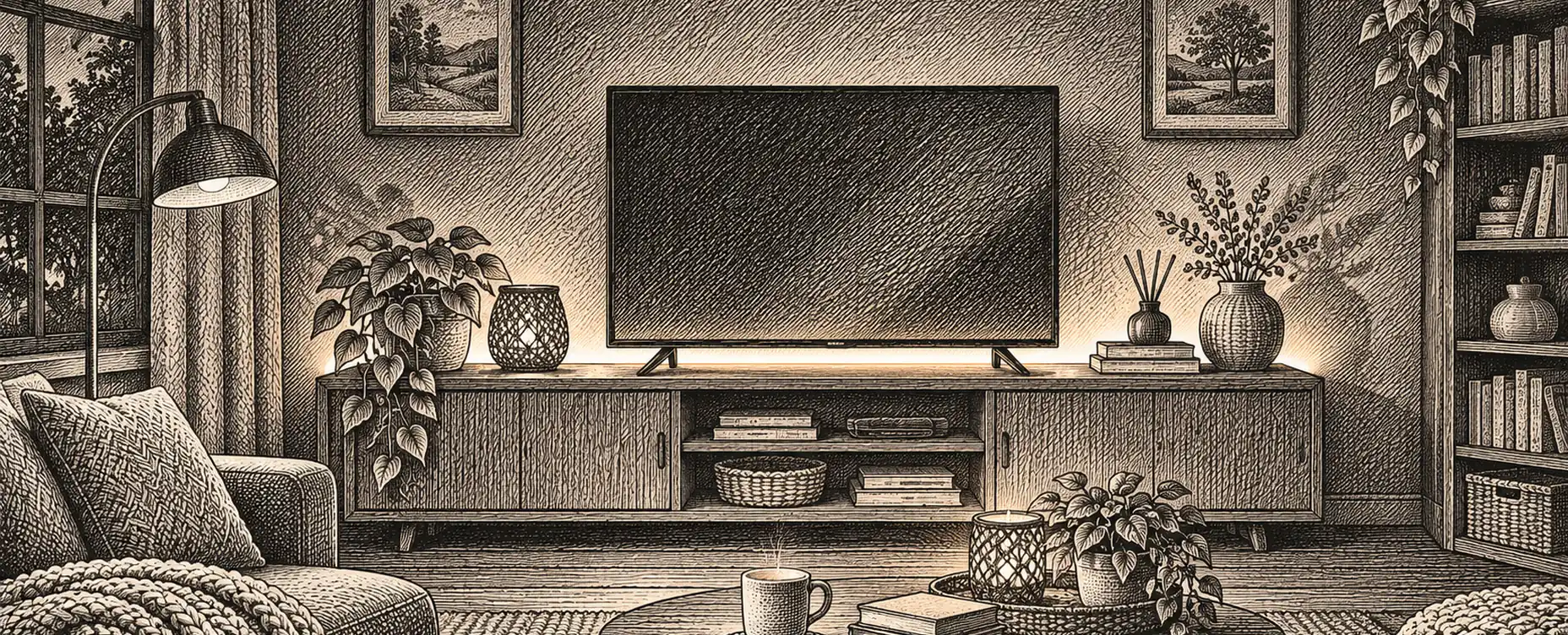
LED light strips split into two genuinely different products that get marketed under near-identical names. A single-colour or basic RGB strip lights evenly along its whole length in one colour at a time — the right, cheaper choice for under-cabinet kitchen lighting, a bed frame, or general accent lighting where even, consistent colour is the goal. An addressable strip (individually controllable LEDs, marketed as RGBIC on Govee's strips or similar branding elsewhere) can show different colours and animated patterns along its own length simultaneously — a rainbow gradient, a chasing effect, or colours that sync to music or a screen.
This site's smart bulb guide covers point-source lighting; strips are the right tool specifically for linear runs — behind a TV or monitor, under a cabinet or shelf, along a skirting board or bed frame — where a bulb's single point of light doesn't fit the fixture.
Cutting and extending are the practical details that decide whether a strip actually fits a specific run: nearly all strips have marked cut points at regular intervals, and most support extension up to a maximum total length per controller before brightness and colour accuracy start to degrade toward the far end.
Addressable strips control individual LED segments independently, enabling gradients, chasing patterns and music/screen sync effects along the strip's own length. Basic RGB strips change colour as a single unit — simpler, usually cheaper, and the better choice when even, consistent colour matters more than pattern effects.
Nearly every strip has marked points, usually every few centimetres, where it can be safely cut to length. Check the maximum total extendable length from one controller/power supply before buying for a long run spanning multiple rooms or a large kitchen.
Cheaper strips lose noticeable brightness and colour accuracy toward the far end of a long run, particularly past the rated maximum extension length. This matters more for functional task lighting (under-cabinet) than mood/accent lighting where slight variation is less noticeable.
A standard indoor strip is not moisture-safe. IP65 or higher-rated variants exist specifically for kitchen splashback proximity, bathroom use, or outdoor installation under eaves — check explicitly rather than assuming any strip is safe near water.
Most strips (Govee, Nanoleaf Essentials, LIFX) are Wi-Fi and app-based; a smaller number (Philips Hue Lightstrip) are Zigbee and integrate directly into an existing hub. Matter support is growing but check the specific model rather than assuming.
Music and screen-sync features vary a lot in actual latency and accuracy between brands; check independent reviews of the specific sync feature you care about rather than the marketing description alone, since this is one of the more subjective, hard-to-spec features in the category.
| Brand | Model | Type | Protocol | Max extension | Indicative price |
|---|---|---|---|---|---|
| Govee | RGBIC strip (various lengths) | Addressable (RGBIC) | Wi-Fi / Bluetooth | up to ~20m per controller | €35–70 |
| Philips Hue | Lightstrip Plus / Gradient | Basic RGB (Gradient adds segmented zones) | Zigbee | up to 10m | €60–180 |
| Nanoleaf | Essentials Lightstrip | Basic RGB | Wi-Fi / Thread (Matter) | up to 10m | €50 |
| Twinkly | Line / Strip | Addressable | Wi-Fi | up to ~10m | €70–100 |
| LIFX | Z / Lightstrip | Addressable (Z) / Basic RGB (Lightstrip) | Wi-Fi | up to ~5–10m | €60–100 |
Prices move constantly and vary by country, so we give an indicative band rather than a figure that would be stale within a month. Check the brand's own store for the current price.
Govee has become the default recommendation for addressable strip lighting: genuinely good gradient and pattern effects, reliable music/screen sync, and a wide range of lengths and form factors (including outdoor-rated variants) at a price well below the premium brands.
App polish and, historically, some privacy/cloud-account concerns common to budget Chinese smart-home brands are worth being aware of; check current app permissions and account requirements before committing to a large multi-strip setup.
Hue's strip is the pick for anyone already on the Hue ecosystem or who wants Zigbee hub integration rather than a separate app and cloud account; the Gradient variant adds genuine segmented colour zones for a TV backlight that meaningfully mirrors on-screen colour.
It's priced well above Govee for a comparable length, and the maximum extendable run is shorter, reflecting Hue's premium-but-more-conservative positioning generally.
Nanoleaf's entry brings Matter/Thread support to strip lighting at a more moderate price than Hue, making it a sensible pick for someone building a Matter-first smart home rather than committing to Zigbee or a proprietary app.
It's a basic RGB strip rather than addressable, so skip it if pattern effects and gradients specifically are the goal rather than even, consistent colour.
Twinkly (an Italian brand well known for its addressable string/fairy lights, extended here into a strip form factor) brings a strong app-based animation and effect library that's particularly good for festive or decorative use beyond plain accent lighting.
It leans more decorative-effect-focused than Govee's broader all-purpose positioning, and third-party hub integration is more limited.
LIFX's strips need no separate hub at all, connecting directly to Wi-Fi like the rest of LIFX's bulb range already covered on this site, which simplifies setup for someone not otherwise invested in a hub ecosystem.
Maximum extension length trails Govee's addressable range, and LIFX's broader smart-home integration (while solid) is a notch behind Hue's Zigbee-based hub compatibility.
RGB strips light their entire length as one colour at a time. RGBIC (or similarly branded addressable strips) control individual LED segments independently, enabling gradients, moving patterns and effects that vary along the strip's own length simultaneously.
Yes, at the marked cut points spaced at regular intervals (commonly every few centimetres), which is standard across nearly every strip in this category. Cutting at any other point will break the circuit for everything beyond that cut.
It varies by brand and model, typically from around 5 metres up to 20 metres for some of Govee's higher-capacity controllers. Check the specific maximum extension length before planning a long multi-room run, since brightness and colour accuracy degrade past that point.
Only a specifically IP-rated (typically IP65 or higher) variant is safe near splashback, steam or moisture generally. A standard indoor strip should not be installed anywhere it could get wet.
Some do — Philips Hue's strips are native Zigbee, and Matter/Thread support is appearing on newer models from other brands. Many budget addressable strips (Govee, Twinkly) are Wi-Fi and app/cloud based with no direct Zigbee or Z-Wave option.
More terms in the smart home glossary.